Sugar Value Chain – Women Welfare
Rationale:
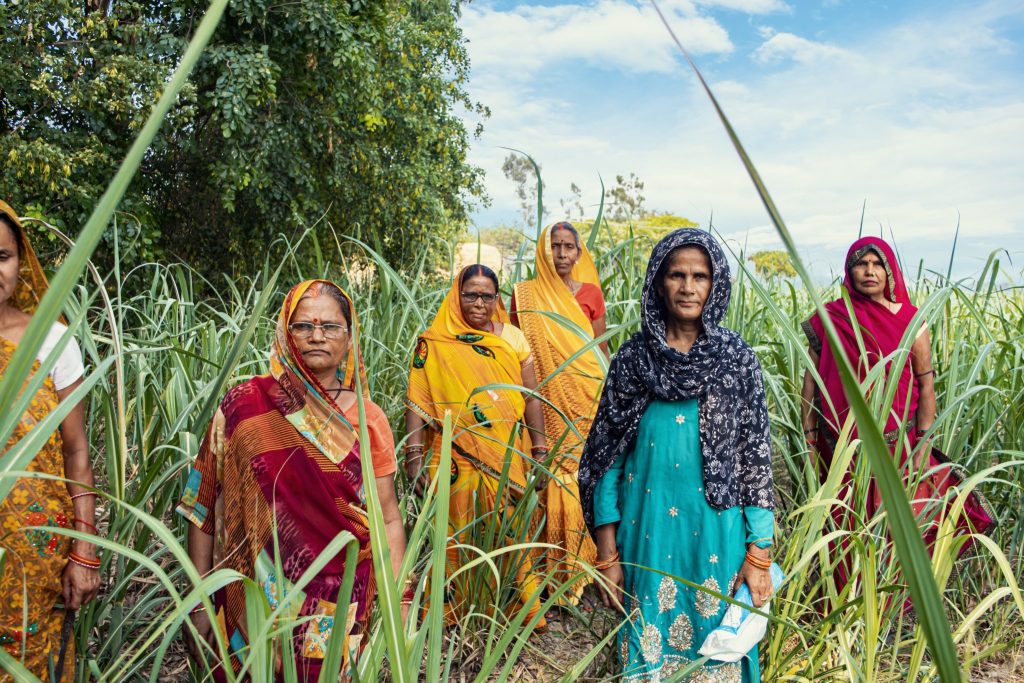
Supported by Women Win Netherlands, this program addresses the gender-related challenges faced by small and marginal women farmers and workers in the sugar value chain in Uttar Pradesh, Uttarakhand, and Maharashtra. AIM Trust, as a civil society organization (CSO), aims to empower women by improving access to welfare schemes, education, healthcare, and sustainable agricultural practices, ensuring inclusive development.
Efforts Made:
AIM Trust has worked extensively to engage with communities through regular village meetings, identifying challenges faced by women and facilitating connections to government welfare schemes. The organization has also raised awareness about digital platforms such as E-Ganna and E-Shram to enhance transparency and access to entitlements.
In education and health, the program has successfully enrolled drop-out children of cane cutters in schools and provided necessary educational support. Simultaneously, health and hygiene workshops were conducted to address prevalent community health issues, developing a culture of better hygiene practices and disease prevention.
To promote skill development and sustainability, women have been trained in leadership, financial literacy, and sustainable farming methods through Good Agriculture Practices (GAP). The formation of self-help groups has further encouraged entrepreneurship and economic independence among women, enabling them to take greater control of their lives.
Opportunities and Results:
The program has created better access for women and their families to welfare schemes, education, and healthcare services, leading to an overall improvement in their quality of life. Community empowerment has been a significant outcome, with self-help groups driving economic independence and collective action. Increased school enrollment for children of cane cutters has laid the foundation for long-term educational and social development. Furthermore, the adoption of sustainable farming practices has not only improved agricultural outcomes but also promoted environmental health and community well-being.
Data Matrix – Sugar Value Chain – Women Welfare Program
| Indicator | Target | Achieved | Remarks |
|---|---|---|---|
| Number of village meetings conducted | 12 meetings per year | 24 meetings (double target) | Increased community engagement and awareness. |
| Children enrolled in schools | 100 children | 150 children | Successful identification and enrollment of drop-out children. |
| Health and hygiene workshops conducted | 10 workshops per year | 15 workshops | Enhanced community health awareness and behavior changes. |
| Women trained in Good Agriculture Practices (GAP) | 200 women | 250 women | Positive response and adoption of sustainable farming practices. |
| Self-help groups formed | 10 groups | 15 groups | Empowering women through entrepreneurship and financial literacy. |
| Women provided with counseling services | 300 women | 350 women | Addressed physical and mental health issues. |
| Number of SHG members benefiting from microfinance initiatives | 50 members | 75 members | Increased access to credit and entrepreneurship support. |
| E-Ganna and E-Shram awareness sessions conducted | 6 sessions | 12 sessions | Improved awareness of digital platforms for transparency. |